Creating A Hunting And Fishing Retreat In Granville County
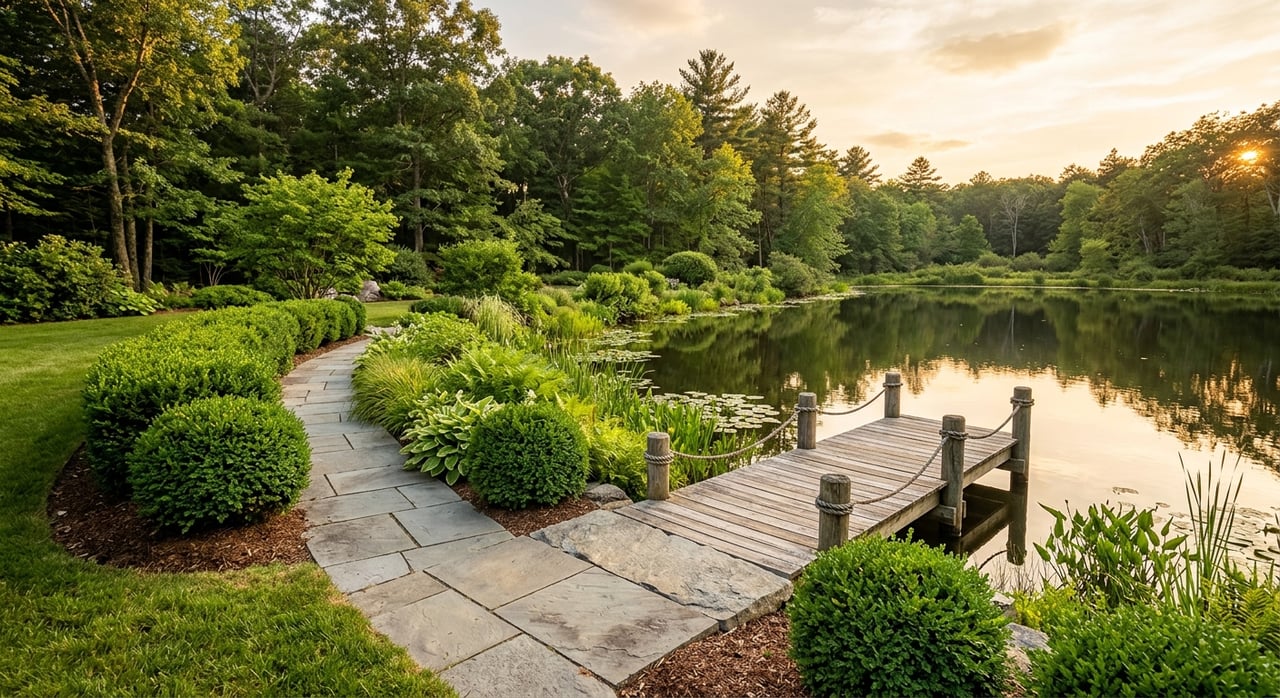
If your idea of a weekend escape includes watching deer move at dusk, hearing turkeys in the spring woods, or casting into a well-planned pond, Granville County deserves a close look. You are not just buying acreage here. You are creating a property that needs the right mix of cover, water, access, and local approvals to work well over time. This guide walks you through what to look for, what to verify, and how to think about building a hunting and fishing retreat in Granville County. Let’s dive in.
Granville County continues to plan around its rural character, which helps explain why buyers often look here for privacy, space, and outdoor use instead of a more suburban setting. For a sporting retreat, that rural identity matters because the land itself is often the main amenity.
The county also gives you practical tools for evaluating property before you ever step on site. Granville County’s GIS system is built from recorded deeds and plats, updates parcels daily, and includes aerial photography current as of 2025. That makes it easier to study woods, openings, pond locations, driveway access, and nearby land uses in one place.
The outdoor setting around the county strengthens that appeal. Falls Lake State Recreation Area includes seven access areas and supports fishing, boating, swimming, camping, and trails, while the Butner-Falls of Neuse Game Land spans Durham, Granville, and Wake counties with public fishing areas and hunter vehicle access roads. Together, those nearby resources reflect how established hunting and fishing culture already is in this part of North Carolina.
A sporting retreat works best when the land supports wildlife in a practical, repeatable way. In Granville County, that usually means evaluating the relationship between timber, openings, edge habitat, travel corridors, and water instead of focusing on raw acreage alone.
White-tailed deer are common across North Carolina, and wild turkeys occur in all 100 counties. The real question is not whether those species can exist in Granville County. The better question is whether a specific tract gives them enough food, cover, and water to stay on or move through the property consistently.
NCWRC guidance says deer need browse within about four feet of the ground, along with mast and cover. It also recommends managing for thickets, young forests, and edges, and placing food plots near heavy cover and away from roads.
For you as a buyer, that means the most useful tracts often include a blend of mature timber, younger regeneration, bedding cover, and openings that can become food plots or shooting lanes. A property with only closed-canopy woods may feel private, but it may not offer the same habitat variety as land with a stronger mix of age classes and edge conditions.
On larger tracts, staggered regeneration can be especially valuable. NCWRC notes that this kind of layout helps keep some cover in early regrowth at all times, which can improve how the land functions for deer over the long term.
Turkey habitat looks a little different. NCWRC says turkeys need large areas with open midstory forests, diverse mast, and strategic openings for brood habitat, while they tend to avoid dense young stands and high-disturbance areas.
In practical terms, a mixed hardwood and pine tract is often more versatile than a uniformly closed stand. Mature hardwoods, thinned or burned pines, streamside hardwoods, and small openings can all add value to a retreat designed for turkey use.
This is one reason a property that looks visually varied on aerials can be worth a closer look. If you see timbered areas, field edges, creek corridors, and a few clear openings, that layout may offer more flexibility than land that appears consistent from boundary to boundary.
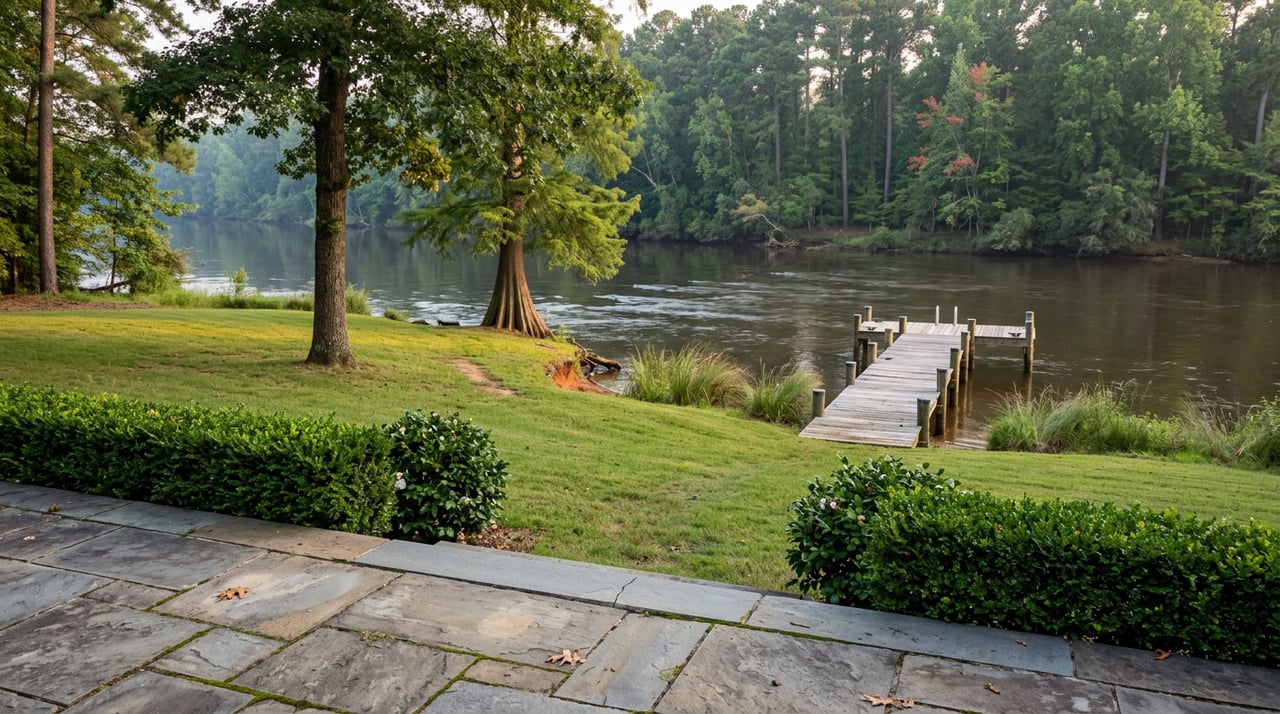
If hunting builds the seasonal rhythm of a retreat, water often makes it enjoyable year-round. A pond, wetland, stream corridor, or nearby water access can improve both recreation and wildlife value.
NCWRC notes that wetlands and ponds provide water filtration, flood protection, recreation, and wildlife habitat. It also says that native vegetation around pond banks, along with submerged woody debris or other fish structure, can increase habitat value.
That matters if you are shopping for an existing pond or thinking about building one. A pond is not just a scenic feature. It is part of the property’s long-term function for fishing, wildlife, and overall enjoyment.
Granville County’s Soil and Water office advises buyers to call before constructing a pond so staff can evaluate the pond’s purpose, site suitability, permit needs, soils, watershed, and size. That is an important step because a strong pond site depends on more than a low spot in the landscape.
A good fishing pond needs the right soil and watershed to perform well. If a pond will require a dam or later modification, the North Carolina Department of Environmental Quality Dam Safety Program may also be involved in review and approval.
When you put the habitat guidance together, a pattern starts to emerge. A versatile Granville County hunting and fishing retreat will often combine a timbered core, edge habitat, a few managed openings, and some form of water feature or access to nearby water.
That is not a formal rule, but it is a useful framework for evaluating land. If a tract already has those ingredients, you may be closer to a functional retreat from day one. If it lacks one or two pieces, you can better judge what improvements may be realistic.
Size also matters, but not always in the way buyers assume. NCWRC notes that deer home ranges average about 640 acres and turkey ranges can span several thousand acres, so larger tracts give you more flexibility. Still, smaller tracts can work if they connect to strong surrounding habitat and are managed carefully.
Before a showing, you can learn a great deal by screening land carefully. Granville County GIS is one of the best starting points because it lets you evaluate parcel lines, access points, aerial views, water features, and neighboring uses with current county data.
It is also smart to pair GIS with the NRCS Web Soil Survey, which NRCS identifies as the official public source of soil data. That can help you understand whether a tract may support pond construction, septic planning, or certain land improvements more easily than another property nearby.
For a buyer creating a retreat, this kind of early due diligence can save time and sharpen your search. It helps you compare tracts based on how they may actually function rather than how they first appear in a listing description.
A sporting retreat should be enjoyable, but it also needs to operate within current rules. In North Carolina, hunting, fishing, trapping, and seasonal regulations are updated annually, so the current NCWRC Regulations Digest is the right place to verify season dates and activity rules.
That is especially important because deer seasons are zone-based and turkey or migratory bird dates can change from year to year. License requirements also depend on the activity and residency, and migratory bird hunters need HIP certification.
Private land access rules matter too. If land is posted, North Carolina’s Landowner Protection Act requires written permission dated within the past 12 months to hunt, fish, or trap there, and land may also be posted with purple paint under the statute’s rules.
Land improvements often involve more than one office, so it is wise to confirm local requirements early. Granville County’s Planning and Zoning office reviews watershed permits, subdivision plats, rezoning, and related land-use issues.
The county specifically says to contact the Planning Division before disturbing land in the Falls Watershed Stormwater Zoning District. If a parcel falls inside that district, that step is especially important before you begin clearing, grading, or other site work.
If your retreat plan includes a cabin, lodge, or home, water testing and septic permits are routed through Granville Vance Public Health. For private wells, county health departments handle those approvals as noted by the state.
A strong retreat is not just about buying the right land. It is also about managing it with clear goals over time. For many owners, that means thinking in terms of habitat function instead of trying to make every acre look polished.
NCWRC emphasizes that thinning, burning, canopy gaps, edge feathering, and other vegetation treatments can improve habitat quality in both hardwood and pine stands. Those kinds of improvements may help a property become more useful for deer and turkey while preserving its long-term character.
There may also be a tax-related stewardship option for qualifying landowners. NCWRC’s Wildlife Conservation Land Program can provide a property tax deferment when private land is managed for protected wildlife species, priority habitat, or as Wildlife Reserve Land.
Wildlife Reserve Land can be especially relevant for a hunting and fishing retreat. NCWRC defines it as land actively used for hunting, fishing, shooting, wildlife observation, or similar activities, with wildlife management practices in place to support a sustaining population of native wild animals.
The program requires at least 20 contiguous qualifying acres, a written Wildlife Habitat Conservation Agreement, and ongoing documented management. NCWRC staff biologists can help landowners complete the agreement, which makes this worth discussing if your long-term ownership goals include active habitat work.
When you tour land in Granville County, try to think beyond the first impression. Ask whether the tract has usable access, whether the woods show age diversity, whether openings can serve a habitat purpose, and whether water is already present or realistically achievable.
Then move to the practical questions. Check whether the parcel may be affected by watershed rules, whether soils support your plans, and whether any pond, cabin, or access improvements will need permits or reviews.
That combination of vision and due diligence is often what separates a scenic parcel from a truly functional retreat. The best properties usually are not perfect by accident. They work because the land, the habitat, and the paperwork all line up.
If you are looking for a Granville County sporting tract, it helps to work with a team that understands not just acreage, but how rural land performs in the real world. Legacy Farms and Ranches can help you evaluate timber, water, access, habitat potential, and the practical details that shape a successful hunting and fishing retreat.
If you have a unique country home, hunting or fishing land, or other premier North Carolina property for sale, call Legacy Farms and Ranches today to learn how they can help you market your property to thousands of discerning viewers across the country.
Get In Touch With Our Team To Learn More About Our Services! Although the disclaimer is below, we will only put you on our Newsletter Mailing List!
Legacy Farms and Ranches of FM Realty
7980 Arco Corporate Dr Ste 105 Raleigh NC 27617