Marketing Strategy For Selling Horse Farms In Wake County
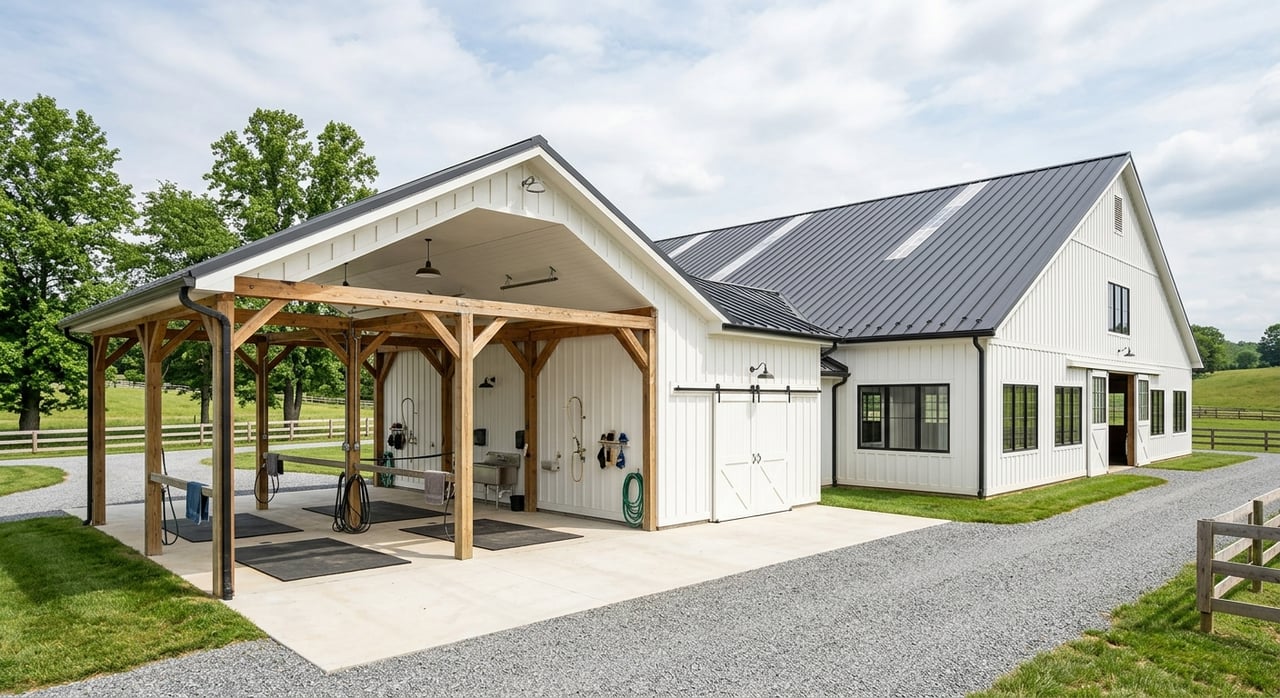
If you market a horse farm in Wake County like a regular home with extra acreage, you can leave real value on the table. Buyers for these properties are often evaluating the land, barn setup, turnout flow, and daily horse logistics just as closely as the house itself. If you want a stronger sale strategy, you need to present the full property story clearly and professionally. Let’s dive in.
Wake County offers a unique mix of scale, connectivity, and real agricultural activity. The county’s 2025 Census estimate puts the population at 1,257,235, with median household income at $105,768, and household computer and broadband access at 98.1% and 95.3%. That means many buyers will first experience your property online, including relocation buyers and people searching remotely.
At the same time, horse property is not a niche afterthought here. The 2022 Census of Agriculture counted 664 farms on 62,323 acres in Wake County, along with 1,238 horses and ponies in inventory. Wake County also ranked seventh in North Carolina for horse, pony, mule, burro, and donkey sales, which supports the idea that equestrian property is a real submarket with its own expectations.
This matters because your marketing should treat the property as a land-and-livestock asset, not just a house with barns behind it. Buyers want to understand how the property functions day to day, what it supports, and how easily they can step into ownership.
A beautiful kitchen may help attract attention, but horse-farm buyers usually look beyond interior upgrades very quickly. They want to know whether the property works for boarding, private riding, turnout management, feed storage, grooming, and trailer movement. Your marketing should answer those questions early.
That means the listing should clearly describe the operational side of the property. Instead of simply saying “barn” or “acreage,” show buyers how the setup supports horses and people safely and efficiently.
Equine facility guidance emphasizes weather protection, fresh air, dry bedding, safe care and feeding areas, and enough room for horses and handlers to move safely. It also highlights the value of durable, flexible, single-story clear-span design and support spaces for hay, grain, bedding, and tack. In practical terms, sellers should document features with detail, not broad labels.
Important barn details to highlight include:
When buyers can picture daily use, they are more likely to see the property’s full value. That is especially important for remote buyers who may narrow their list before ever setting foot on the farm.
On a horse property, acreage alone does not tell the full story. Buyers need to know how the land is arranged and whether it supports turnout, pasture rotation, riding, and separation of horses when needed.
Equine facility guidance notes a general rule of 2 to 3 acres per horse for year-round grazing unless horses are supplementally fed. That does not mean every buyer will use the land the same way, but it does show why layout matters so much. A well-planned 15- or 25-acre property can sometimes present better than a larger tract with weak fencing, awkward paddock division, or limited access.
Wake County’s farm profile supports this point. According to the 2022 Census of Agriculture, 48% of county farms are 10 to 49 acres and 26% are 50 to 179 acres. In other words, many local horse properties fit the efficient, multi-use acreage model rather than the oversized ranch model, and your marketing should reflect that.
In today’s market, the first showing is usually online. Research cited in the report shows that 52% of buyers found their home online, 70% used a mobile device or tablet during the search, and most buyers and sellers worked with a real estate professional.
That behavior lines up with Wake County’s local household profile. With 98.1% computer access and 95.3% broadband access, it is reasonable to plan for a digitally driven first impression. For a horse farm, that means your media package should do much more than provide a few standard photos.
Horse-farm marketing works best when the visuals help buyers understand movement, layout, and scale. Aerial views can show paddock configuration, riding areas, and how barns relate to the home. Interior barn footage can show cleanliness, circulation, and functionality.
The strongest media plan often includes:
This approach is supported by buyer behavior and listing performance data. Zillow reports that listings with a 3D Home tour received 37% more views and went pending 14% faster on average. For a specialty property, that extra visibility can be especially valuable.
Remote buyers are not only buying a property. They are also buying into a region, a routine, and a support system for horse ownership. Your marketing should help them understand why Wake County works.
The research report identifies several useful reference points. The James B. Hunt Jr. Horse Complex in Raleigh spans 50 acres and has stalls for more than 585 horses. NC State’s Equine Veterinary Service in Raleigh offers 24/7 emergency and critical care, and William B. Umstead State Park in Wake County includes horse trailer parking. These kinds of details can help frame the area as a practical place for equestrian living with metro access.
A horse-farm showing should not be handled like a typical residential appointment. Visitors need to move through the property safely, and the farm still has to function during the showing window.
Wake County exempts agricultural activities during daytime hours from its noise prohibition, while its animal code still treats excessive or untimely animal noise and nuisance behavior as actionable. A practical takeaway is to plan tours around feeding, turnout, manure cleanup, and trailer movement when possible, while keeping visitors separated from horses unless a controlled introduction is appropriate.
The best showing experience makes the farm easy to understand. Buyers should be able to see the entry sequence, home site, barn area, riding spaces, paddocks, and support areas without confusion or safety concerns.
Before going live, sellers should prepare for:
This kind of preparation supports stronger buyer confidence. It also reinforces the idea that the property has been managed with care.
In Wake County, preservation status can shape both marketing and due diligence. North Carolina requires recorded notice when a property is in a voluntary agricultural district or within one-half mile of one. That means sellers should understand whether the tract has that connection before the listing strategy is finalized.
Wake County’s revised farmland preservation program had preserved 238 acres by 2024 and includes Enhanced Voluntary Agricultural District and agricultural conservation easement options. If a property has any preservation-related status, it may affect buyer expectations, listing language, and how the property’s long-term use is discussed.
Not every parcel in Wake County is governed the same way. Wake County subdivision standards apply to unincorporated county land outside incorporated municipalities, so location-specific rules should be checked against the exact parcel.
For sellers, the key point is simple. You do not want to make assumptions about use, division potential, or local standards in your marketing before confirming the property’s jurisdiction and status. Accurate positioning builds trust and helps avoid confusion later.
Horse farms often attract more than one type of buyer. One prospect may be a local owner looking for a better setup, while another may be an out-of-area buyer searching for a turnkey equestrian property near Raleigh. Your marketing should speak to both without losing clarity.
That means combining practical detail with polished presentation. You want buyers to see stall count, layout, and pasture function, but you also want them to feel the ease of the drive, the openness of the land, and the convenience of owning horses in Wake County.
For many sellers, this is where specialist marketing makes a difference. A strong campaign can pair high-production visuals with stewardship-minded property knowledge, helping you present the farm as both a working asset and a meaningful place to own.
If you are preparing to sell a horse farm in Wake County, a thoughtful strategy can help you attract the right audience, reduce confusion, and present the property at its full value. When you need expert guidance on equestrian property marketing, staging logistics, and buyer presentation, Legacy Farms and Ranches can help you tell the right story.
If you have a unique country home, hunting or fishing land, or other premier North Carolina property for sale, call Legacy Farms and Ranches today to learn how they can help you market your property to thousands of discerning viewers across the country.
Get In Touch With Our Team To Learn More About Our Services! Although the disclaimer is below, we will only put you on our Newsletter Mailing List!
Legacy Farms and Ranches of FM Realty
7980 Arco Corporate Dr Ste 105 Raleigh NC 27617