Planning A Multi-Use Tract In Harnett County
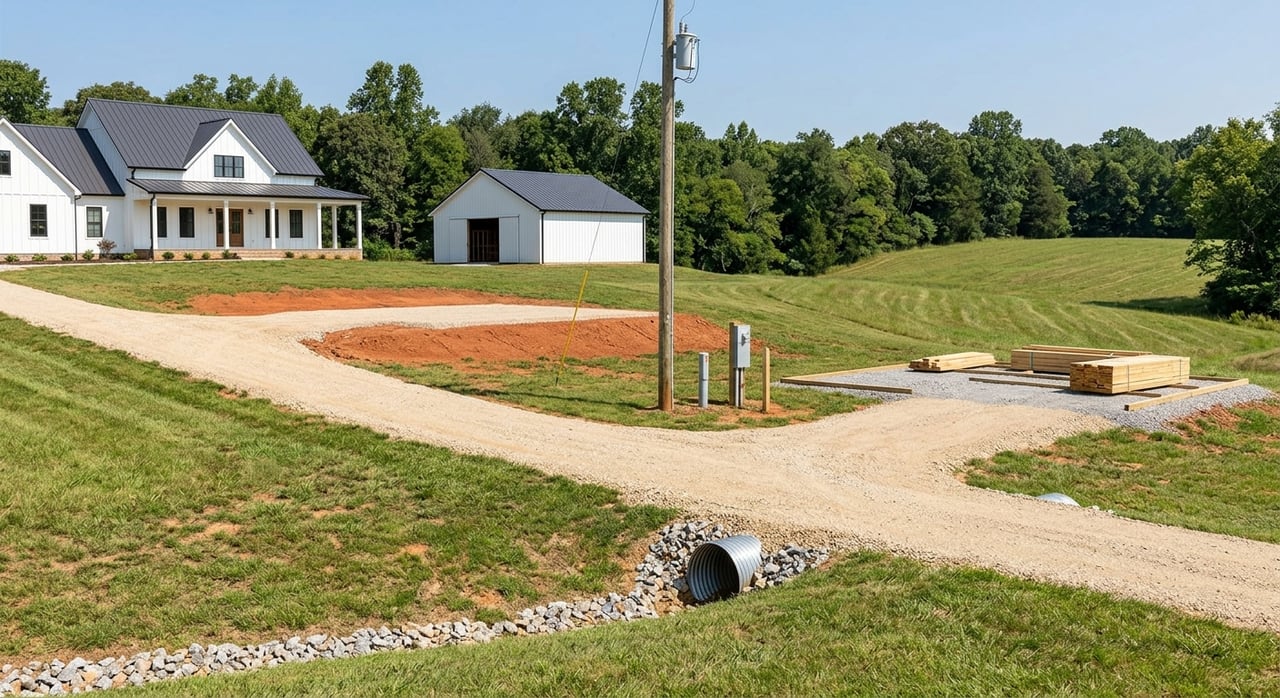
If you want one property to support a homesite, animals, timber, and room to grow, the layout matters more than most buyers realize. In Harnett County, a multi-use tract can work very well, but only if you confirm jurisdiction, access, utilities, and land constraints before you lock in your plans. A little early planning can protect both your budget and your long-term flexibility. Let’s dive in.
Before you sketch a barn, driveway, or homesite, confirm whether the tract is in unincorporated Harnett County or inside a town jurisdiction or ETJ. That matters because Harnett County’s Unified Development Ordinance applies only in unincorporated areas, and parcels inside a town zoning area may need town approval before county forms can move forward.
This first step can save you time and prevent layout mistakes. Harnett Planning Services publishes the official zoning map, future land use map, and permitted uses chart, which makes it easier to understand how the tract is regulated before you commit.
For many rural buyers, the good news is that Harnett’s definition of agriculture is broad. It includes crop production, timber, livestock including horses, aquaculture, farm operations, and agritourism.
The county also states that bona fide farms are exempt from zoning provisions. At the same time, non-farm uses on farm property remain regulated, and non-farm structures still must comply with the State Building Code and other applicable rules. In plain terms, one tract may support several land uses, but you still need to separate true farm activity from anything outside that scope.
One of the most useful tools for buyers is Harnett County’s no-cost pre-development meeting. This meeting can bring planning, environmental health, addressing, fire marshal, engineering, and public utilities staff into the conversation before you finalize a layout or close on the property.
That kind of early coordination is especially valuable on a multi-use tract. If you are trying to balance a home site, horse area, timber management, and future resale options, getting project-specific feedback early can help you avoid expensive redesigns later.
Access is one of the biggest drivers of value and usability. If your tract fronts a state-maintained road, the North Carolina Department of Transportation requires a driveway permit to obtain or modify access to the State Highway System.
There is no application fee, but review time depends on the complexity of the request. That is why it makes sense to contact the local District Engineer early if road access will shape your plan.
If access crosses another property, make sure it is legally recorded and easy to prove on paper. Harnett defines an access way as a legally recorded way of approach across another property, and that paperwork can become very important if you later subdivide, refinance, or sell.
For long-term flexibility, clean access documentation is just as important as having enough road frontage. A tract that works well today can become much harder to use or market if access questions come up later.
If you think you may divide the tract in the future or want to preserve multiple use options, planning ahead matters. Harnett reviews major, minor, and exempt maps before development and again before recordation, so the way the tract is configured on paper can affect your future choices.
This is where a careful land plan can add real value. You may want the homesite, barn area, timber acreage, and access points arranged in a way that still works if your goals change later.
Another detail buyers often miss is future transportation planning. If the tract lies along a corridor identified in the county’s Comprehensive Transportation Plan, building setbacks may be measured from a future right-of-way rather than the current road edge.
That can reduce your practical building envelope if you do not catch it early. It is one more reason to study the parcel before placing key improvements.
A common mistake is choosing the prettiest homesite first and trying to make the rest of the property work around it. Harnett’s development rules make clear that lot size and placement should reflect topography and intended use, with attention to soils, flood plains, drainage, and ground and surface water.
On a multi-use tract, the best homesite is not always the first open field or highest point. It is usually the site that works with access, septic feasibility, drainage, and the overall flow of the property.
Harnett’s GIS viewer can help you screen for soil information, flood zones, wetlands, watershed areas, zoning, deed history, surveys, and the county or city split. That makes it a very useful first-pass tool when you are evaluating conservation areas, drainage patterns, and likely building envelopes.
Still, the county says GIS screenshots are for reference only and are not legal survey documents. Think of GIS as a smart starting point, not the final word.
Septic and well feasibility can make or break your layout. Harnett Environmental Health lists several septic system types with different soil-depth thresholds, including 36 inches for conventional systems, 24 inches for shallow conventional, 20 inches for low-pressure pipe, and 18 inches for fill systems.
That means one section of the tract may support a homesite more easily than another. If you place your driveway, barn, or paddocks first, you could accidentally use up the area that works best for the home and septic system.
If you plan to use a private well, the county requires a site plan showing property lines, easements, the facility, the proposed well location, nearby wells, sewer lines, storage tanks, and possible contamination sources. Harnett also notes that the permit becomes invalid if the information changes or the site is altered, and the construction authorization expires within five years.
That is another reason to avoid guessing. The more settled your plan is before applying, the smoother the process tends to be.
If public water or sewer are available, Harnett Regional Water uses separate tap and meter applications. The county also notes that septic and well permits are handled through Central Permitting.
For some buyers, utility availability may influence where the homesite belongs or whether the tract supports the mix of uses they want. It is worth comparing private and public utility paths early.
If part of your plan includes timber, the economics can stretch beyond a future harvest. North Carolina’s Present-Use Value program allows qualifying agricultural, horticultural, and forest land to be assessed at present use rather than market value.
For forestland, the property must be part of a forest unit actively engaged in commercial tree growing under a sound management program, and at least one tract in the unit must be at least 20 acres. If the land later stops qualifying, deferred taxes for the previous three fiscal years plus interest become due.
Timber can be a valuable part of a multi-use tract, but it should be planned carefully. NC State Extension notes that timber sales are infrequent and markets and species values can change, which is why a consulting forester can help with sale method, pricing, contracts, and regeneration planning.
The N.C. Forest Service also recommends having a preharvest plan before any timber harvest. Its FPPT tool can help map sensitive areas, streamside management zones, decks, and best management practice features, but the agency says it should be supplemented by a site inspection from natural resource professionals.
Many buyers want a tract that supports both practical use and enjoyment. If your vision includes recreation, events, or shooting activities, check county rules early.
Harnett Planning publishes both a noise ordinance and a firearms discharge ordinance among its regulations. This matters because a tract that works well for farming or timber may have additional rules to consider when you add non-farm uses.
Before closing on a multi-use tract in Harnett County, focus on the items that can most affect how the property works:
A well-planned multi-use tract gives you more than a place to live. It can give you room for horses or livestock, long-term timber value, better resale flexibility, and a layout that supports how you want to use the land over time.
The key is making decisions in the right order. When you start with jurisdiction, access, land constraints, and utility feasibility, you give yourself a much better chance of creating a tract that works now and still works later.
If you are weighing acreage in Harnett County and want experienced guidance on how a tract may fit your goals, Legacy Farms and Ranches can help you evaluate rural land with a stewardship-minded approach.
If you have a unique country home, hunting or fishing land, or other premier North Carolina property for sale, call Legacy Farms and Ranches today to learn how they can help you market your property to thousands of discerning viewers across the country.
Get In Touch With Our Team To Learn More About Our Services! Although the disclaimer is below, we will only put you on our Newsletter Mailing List!
Legacy Farms and Ranches of FM Realty
8521 Six Forks Road, Ste 105 Raleigh, NC 27615