Timber And Wildlife Planning For Caswell County Acreage
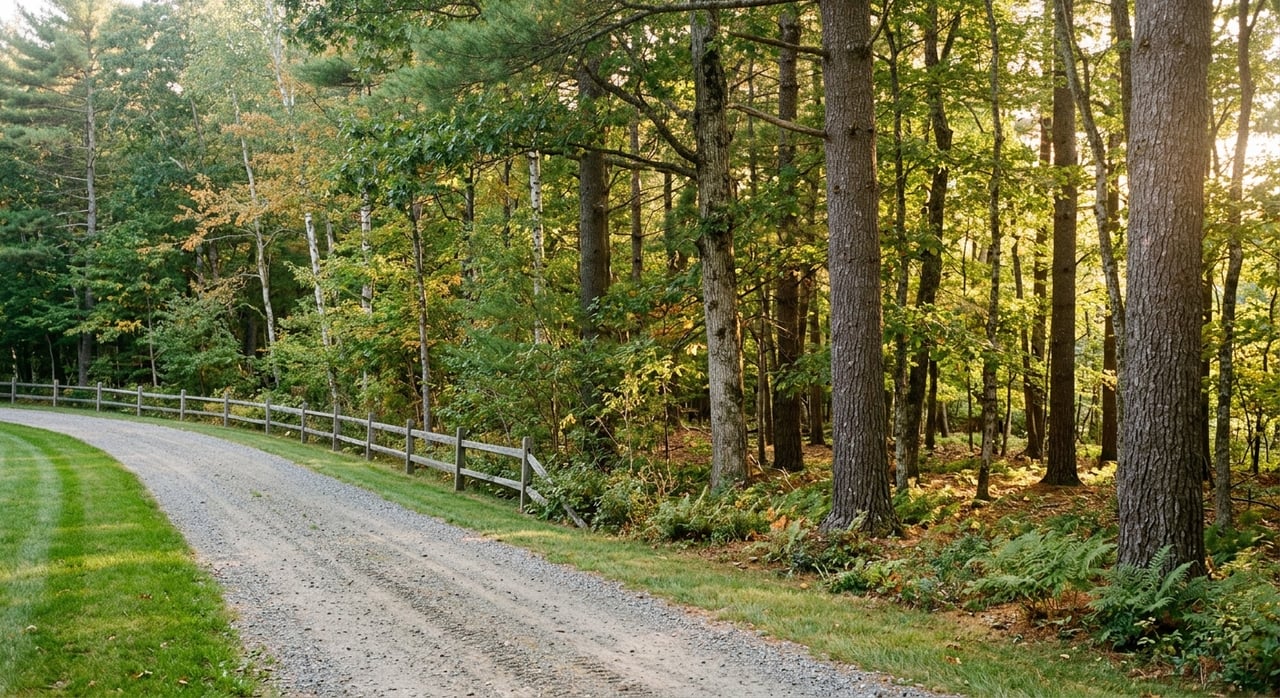
If you are looking at acreage in Caswell County, timber and wildlife planning should not be an afterthought. In this part of North Carolina, woods, farms, water, and access all shape how a property lives and what it can become over time. A good plan helps you see beyond the listing photos so you can evaluate income potential, habitat value, and day-to-day land use with more confidence. Let’s dive in.
Caswell County has deep agricultural and forestry roots. The 2022 Census of Agriculture reported 412 farms, 84,373 acres in farms, and 39,288 woodland acres on farms. A 2020 forestry impacts report estimated 171,564 acres of privately owned timberland and about 196,115 acres of total timberland or forestland in the county.
That scale matters when you are buying acreage. Timber in Caswell County is not a side feature on a plat map. It is a major part of the land itself, with roughly 71% of county land in timberland or forestland and about $14 million in forest-sector output tied to the local economy.
For buyers, that means wooded acreage often carries more than scenic appeal. It may also hold long-term management value, habitat opportunities, and choices about future use that deserve careful review before you buy.
One of the biggest mistakes buyers make is asking, “Can I harvest timber here?” before asking, “What is actually on this land?” The North Carolina Forest Service defines preharvest planning as identifying and summarizing site and timber information before any harvest decision is made. That includes topography, soils, water resources, species, tree size, and accessibility.
In simple terms, your first step is to understand the tract. You want to know where the wet areas sit, where roads or trails already exist, how clear the boundary lines are, and whether the timber is uniform or made up of different stands and ages. Those details affect everything from value to usability.
A strong inventory usually includes:
This is one reason rural property deserves a more specialized buying approach. What looks like “nice woods” on first visit may actually be overstocked pine, low ground, hard-to-reach timber, or a tract with good habitat potential but limited immediate harvest value.
The North Carolina Forest Service describes woodland plans as tailored roadmaps prepared with a forester or other resource professional. These plans can help you balance multiple goals, including timber, wildlife habitat, recreation, natural beauty, and water quality.
That is especially useful if you are buying acreage for more than one reason. You may want a future homesite, room to hunt or recreate, and a path to better timber value over time. A woodland plan helps organize those goals into a management strategy instead of a series of disconnected decisions.
In a county like Caswell, where private ownership shapes much of the forestland, private land decisions carry real weight. A thoughtful plan helps you avoid quick fixes that can reduce long-term flexibility.
If you are evaluating replanting, improvement work, or long-term timber management, species choice matters. NC State Extension notes that tree selection should fit the region, soil type, and local timber market.
For the Piedmont, loblolly pine and shortleaf pine are among the generally recommended species. Loblolly is described as the most productive southern pine on better Piedmont sites, while shortleaf is common in the Piedmont but usually grows more slowly on most sites.
That does not mean one species is always better. It means the land itself should guide the decision. Soil, site quality, and your goals should come first, especially if you want both timber performance and wildlife benefits.
Many buyers assume timber value is all about a final cut. In reality, thinning is one of the most useful tools for improving a stand. NC State Extension notes that thinning can improve vigor, growth, value, access, fire protection, and wildlife values.
Thinning works by reducing competition. Instead of many trees crowding each other, the stand shifts growth onto fewer trees with better long-term potential. Larger-diameter trees generally have higher stumpage value, so early management can influence future value.
In overstocked pine stands, precommercial thinning is often considered when stands are about 4 to 8 years old. Commercial thinning later can improve stand health and usability while also making the property easier to move through and manage.
If wildlife habitat is one of your goals, a dense closed-canopy stand is not always your friend. NC State Extension explains that as pine stands mature and the canopy closes, the understory can lose the food and cover many species need.
More sunlight on the forest floor usually means more herbaceous plants and shrubs. That added ground-level growth can support deer, turkey, bobwhite quail, cottontail rabbits, and songbirds. In practical terms, wildlife planning often means opening the stand up instead of leaving it untouched.
Wildlife-friendly pine guidance from NC State Extension recommends:
This is where buyers should think in patterns, not single features. A healthy habitat plan usually works best when the property offers a mix of cover, openings, edges, and varied stand ages.
One of the best ways to understand wildlife planning is to picture the land as a mosaic. NC State Extension notes that species often use different parts of a property for different needs. For example, deer may use young pine for cover and nearby mature hardwoods for mast.
That is why variety matters so much. If every acre looks the same, habitat options shrink. If a tract includes young growth, mature timber, streamside cover, openings, and edge conditions, wildlife use is often more flexible.
Useful habitat features may include:
Even if a full property treatment is not practical, targeted work around roads, margins, and open pockets can improve habitat function.
Prescribed fire can be a helpful tool, but timing and stand condition matter. NC State Extension says prescribed burning in an unthinned stand usually does little for habitat because sunlight still cannot reach the ground well enough for many desirable plants to respond.
That is why fire often works best after thinning or in already open stands. The North Carolina Forest Service describes prescribed fire as a planned management tool that can benefit forests and wildlife while also reducing wildfire hazard.
In North Carolina, burns are often conducted in the dormant season. If you are considering land where fire may be part of the long-term plan, it helps to ask early about access, burn lanes, nearby uses, and who would guide the process.
Before you buy acreage, it is worth checking county rules that may affect your plans. Caswell County’s planning department administers land-use ordinances that include zoning, subdivision, watershed, flood damage prevention, and environmental protection.
The county states that only the Hyco Lake area, the Town of Yanceyville, and the Town of Milton are zoned. Elsewhere in the county, subdivision setbacks apply. That distinction matters if you are considering future building, division of land, or a tract that may have both wooded and development value.
The county also states that a 30-foot undisturbed buffer plus a 50-foot vegetative buffer applies to development activities along perennial waters. Agriculture and forestry activities are exempt from that watershed buffer requirement. If your vision includes both wooded land and future improvements, you will want to sort out which parts of your plan are considered development and which are considered forestry or agricultural activity.
Acreage buyers do not need to figure this out alone. Caswell County has several useful local resources for landowners and prospective buyers.
The North Carolina Forest Service has a Caswell County office in Yanceyville and can help connect landowners to local guidance. The agency also maintains a Caswell County consulting foresters list and advises landowners to compare references and qualifications before choosing one.
NC Cooperative Extension’s Caswell County Center also serves as a practical place to start for forestry and habitat education. Its staff listing identifies an area specialized forestry agent serving Caswell County.
Caswell Soil & Water Conservation District is another valuable contact. According to the county directory, the district provides technical assistance related to woodland, wildlife, recreation, erosion control, and water quality, which can be especially helpful when you are thinking about trails, access improvements, openings, or long-term land care.
For broader habitat context, the North Carolina Wildlife Resources Commission manages game lands in the region, including the R. Wayne Bailey-Caswell Game Land with 18,030 acres in Caswell County. If a private tract borders public hunting land or sits near managed habitat, that context may help you better understand surrounding land use and wildlife movement.
When you walk a wooded tract in Caswell County, you are not just buying trees. You are evaluating a system of soils, water, access, habitat, management history, and future options. The more clearly you understand that system, the better your purchase decision will be.
That is where experienced land guidance matters. A strong land specialist can help you frame the right questions, identify where expert review is needed, and understand how timber, habitat, homesite potential, and marketability fit together on one property.
At Legacy Farms and Ranches, we believe rural land should be approached with both stewardship and strategy. If you are considering Caswell County acreage and want help evaluating how timber, wildlife, and long-term land use work together, connect with Legacy Farms and Ranches.
If you have a unique country home, hunting or fishing land, or other premier North Carolina property for sale, call Legacy Farms and Ranches today to learn how they can help you market your property to thousands of discerning viewers across the country.
Get In Touch With Our Team To Learn More About Our Services! Although the disclaimer is below, we will only put you on our Newsletter Mailing List!
Legacy Farms and Ranches of FM Realty
7980 Arco Corporate Dr Ste 105 Raleigh NC 27617