Equestrian Property Essentials In Chatham County
You want a place where your horses thrive and your routines feel easy. In 27207 around Bear Creek and Pittsboro, the right parcel can deliver quiet acreage and Triangle convenience, but small details like soils, buffers, and farm status make a big difference. In this guide, you’ll learn how zoning, taxes, soils, site planning, and local riding options shape daily life on a Chatham County equestrian property. You’ll also get a clear checklist to use before you write an offer. Let’s dive in.
Chatham County sits within the greater Triangle region, which gives you country acreage with practical access to jobs, services, and clinics. County rulemaking has been active. Chatham adopted a new Unified Development Ordinance in 2024, and some provisions have been contested and extended, so you should confirm what is currently enforced with County Planning before you rely on a rule. You can start with the county’s Planning page for current contacts and updates.
Visit Chatham County Planning for current zoning and UDO information.
Before you plan a barn or any equine business activity, confirm whether the property qualifies for bona fide farm status under Chatham’s ordinance. The county lists common evidence used to determine farm use, such as a farmer sales-tax exemption certificate, Present-Use Value enrollment, a Schedule F, or a forest management plan. Farm status can change which zoning rules apply and may affect whether you need certain permits.
Review Chatham’s guidance on bona fide farm status and permitted uses.
Also check for Present-Use Value (PUV), a North Carolina program that assesses qualifying agricultural and forestland at use value rather than market value. PUV can reduce taxes but carries rollback provisions if land use changes. Verify whether a parcel is enrolled or eligible and understand how removal would affect long-term costs.
Learn how North Carolina’s PUV program works.
In plain terms, zoning, farm status, and PUV determine where you can place structures, whether a commercial equine use needs special approvals, and what your ongoing taxes may look like.
Soils drive pasture productivity, arena drainage, and septic siting. Before you buy, pull the parcel’s Web Soil Survey map and look at texture, drainage class, slope, wetness, and pasture/hay ratings. A site walk after heavy rain helps you spot low areas, wet hollows, and hydric soils that will increase mud and drainage costs.
Find local soils information and mapping resources through Chatham Soil & Water.
For pasture management, follow Extension basics. Soil test before planting or renovating, apply lime and fertilizer only as tests recommend, and design a rotational grazing plan. Many NC agents suggest planning for about two acres per horse under continuous grazing, with the understanding that better forage and rotation can support more horses on the same land.
Read NC Cooperative Extension’s practical guidance on managing horse pastures.
If you keep broodmares, be mindful of tall fescue. Many Southeast pastures include tall fescue that can harbor an endophyte producing ergovaline, which is associated with foaling problems in pregnant mares. Work with your vet and Extension on testing seed or pasture, managing timing, and choosing endophyte-free or novel endophyte varieties.
See veterinarian-backed steps to avoid fescue toxicity in mares.
Picking the right arena site saves time and money. Look for a naturally level area with good drainage or space to build a proper sub-base and swales. Steep or wet soils raise costs because they need excavation, geotextile, engineered base, and more intensive drainage.
Use Chatham’s soils resources to evaluate drainage and slope before you build.
Chatham’s watershed protections include stream and riparian buffers, especially tied to Jordan Lake. Placing stalls, manure storage, or fertilizer handling inside required buffers may be restricted or need mitigation. Map any streams or buffers on your parcel and plan barn and paddock setbacks early.
Review Chatham’s Watershed Protection Ordinance and buffer standards.
Floodplains also matter. The county enforces a Flood Damage Prevention Ordinance that limits or conditions construction in mapped flood areas. Do not assume that every rural flat spot is a safe place for a barn, arena, or septic field.
Check flood requirements in Chatham’s Flood Damage Prevention Ordinance.
If a parcel lacks municipal water or sewer, you will need a private well and septic. Environmental Health requires a permitting process that includes a site plan with home location, setbacks, and a floodplain determination. Setbacks between wells, septic drainfields, and manure or compost areas can reshape your entire layout, so order a percolation and soil evaluation early.
Start with Chatham Environmental Health’s well and water permitting page.
Finally, confirm trailer access. Walk the driveway for narrow gates, tight turns, low limbs, and overhead lines. Ask for photos from the seller or test the approach with your trailer if possible.
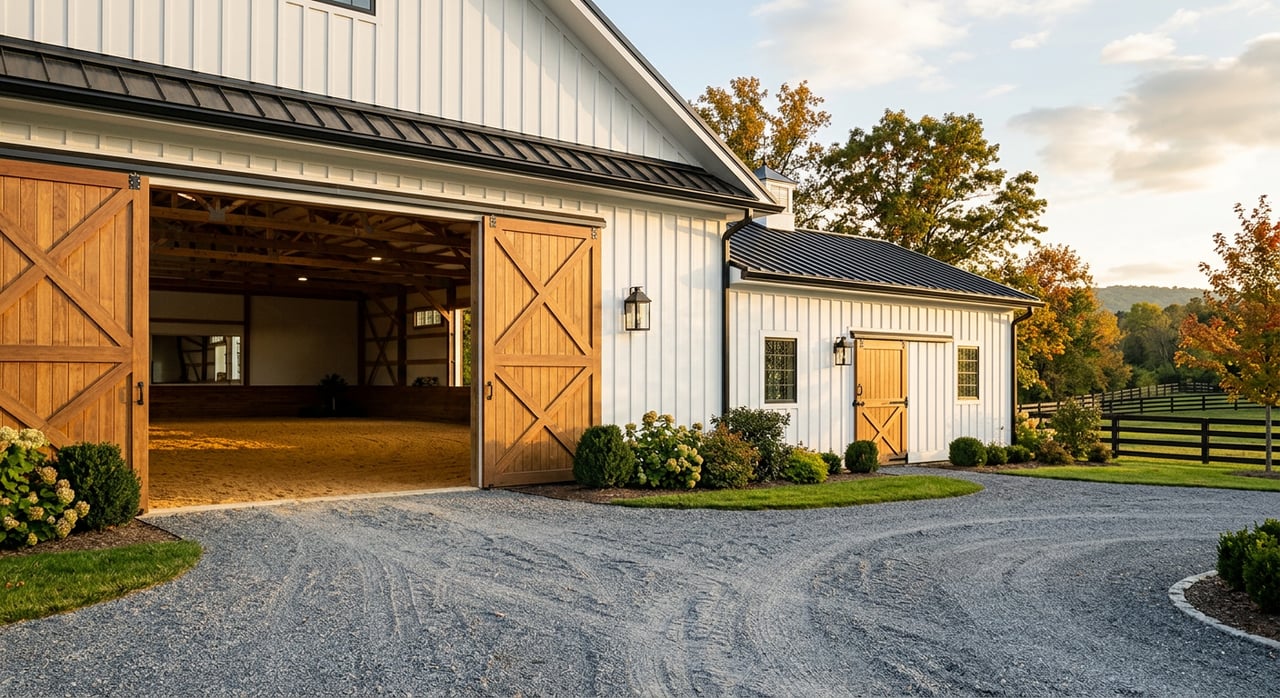
What you can build, and how it is permitted, depends on zoning and whether your land qualifies as a bona fide farm. Pole barns, run-in sheds, and enclosed stables may be treated differently, and barns that include a dwelling unit, commercial boarding, lessons, or agritourism can trigger different rules. Confirm permitted uses and building code requirements with Planning and Inspections before you commit to a design.
See Chatham’s reference on agricultural uses, barns, and permitting considerations.
From a practical standpoint, walk a barn with a checklist. Look at stall size and layout, hay storage that stays dry and away from animal areas, tack, feed, and medication rooms, and a grooming or wash space with proper drainage. Identify a manure collection or composting site that meets water setbacks and plan safe fencing with solid gates for truck and trailer access.
Utilities and fire safety affect daily comfort and insurance. Check for adequate power with dedicated circuits, good ventilation, water availability, and clear access for emergency vehicles if you plan clinics or lessons. These details influence both usability and operating costs.
How many horses a property can support depends on soils, forage, slope, and your management style. Continuous grazing often requires more acres per horse than rotational systems. Instead of relying on a rule of thumb, pair a soil test with an Extension-backed forage plan to right-size stocking.
Use Extension’s pasture management guide to plan stocking and rotation.
Topography and wet areas shape your chores. Steep slopes add fencing and erosion costs and can limit hay equipment access. Identify likely winter mud zones and plan sacrifice areas to protect your best grass.
Neighbors matter too. Dust, flies, and daily horse traffic can create tension if expectations differ. Ask sellers about nearby farm operations and typical road use so you understand the local rhythm and any agricultural districts or tax classifications that signal an actively rural area.
Check Chatham’s agricultural and nuisance expectations to set realistic neighbor relations.
Chatham’s location gives you solid trailering options for lessons, clinics, and shows across the Triangle. Jordan Lake’s recreation area is a frequent destination for equestrians who value water access and outdoor time. Looking ahead, North Carolina’s planned Equine State Trail includes Chatham County and is likely to expand multi-county trail access over time.
Explore the State’s developing Equine State Trail plan.
Use this quick list before you finalize an offer:
Buying horse property is both a land decision and a logistics project. You deserve a team that speaks soils, setbacks, and stocking rates, and can also help you coordinate the move. With Accredited Land Consultant leadership and decades of farm and equestrian experience, our team brings hands-on insight to site walks, barn planning, and due diligence. We can help you stage inspections, coordinate contractors, and manage the details so you and your horses land smoothly.
Ready to explore properties around Bear Creek and Pittsboro or vet a parcel you already love? Reach out to schedule a tailored consult and walk-through. You will get clear next steps, trusted resources, and a plan that respects your horses and your time. Start the conversation with Legacy Farms and Ranches.
If you have a unique country home, hunting or fishing land, or other premier North Carolina property for sale, call Legacy Farms and Ranches today to learn how they can help you market your property to thousands of discerning viewers across the country.
Get In Touch With Our Team To Learn More About Our Services! Although the disclaimer is below, we will only put you on our Newsletter Mailing List!
Legacy Farms and Ranches of FM Realty
8521 Six Forks Road, Ste 105 Raleigh, NC 27615